The Final Thesis · section 32 of 92
CHAPTER 3 — 2014–2018: THE GREAT DIGITAL BACK-OFF
The innovation did not disappear. The ambition changed.


4
This is the most important analytical section of the thesis.
It is also where the question must be asked without pretending that the public record already contains the answer.
Between 2014 and 2018, Shah Rukh Khan's film campaigns continued to use digital platforms, games, social media, interactive promotions, branded content and character-led storytelling.
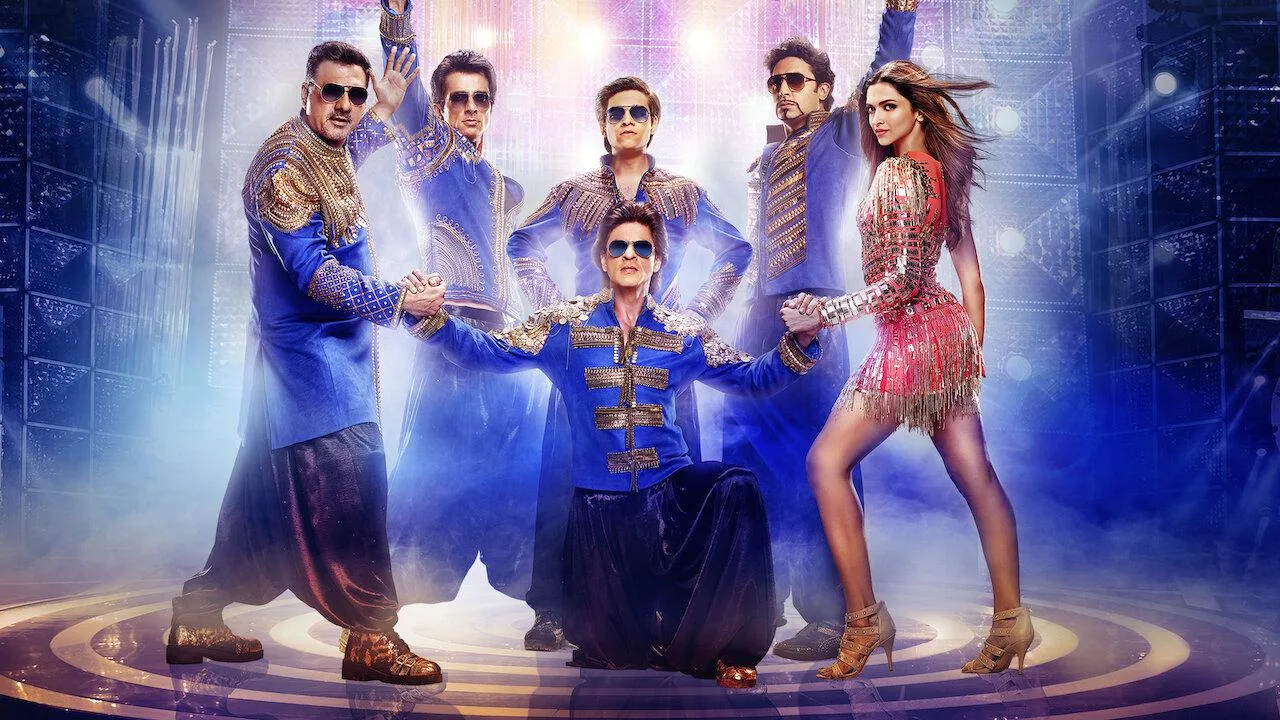
Happy New Year used gaming and personalised promotional content. Dilwale employed digital and social-media promotion. Fan made the relationship between a superstar and his admirer the centre of its narrative. Dear Zindagi used the Tinder integration “Swipe Right to Zindagi.” Jab Harry Met Sejal experimented with mini-trails and social-media effects. ZERO used character-led promotions, WhatsApp stickers, Bauua Ki Toli rewards, Alexa and Snapchat AR.
These were not technologically empty campaigns.
ZERO, in particular, is an important counterexample to the claim that innovation simply stopped.
But a distinction emerges when the campaigns are compared with the ambitions of Ra.One and Chennai Express.
The earlier projects attempted to build more interconnected systems around characters, intellectual property, interactive experiences, merchandising and collective fan participation.
The later campaigns more often concentrated on film-specific content, platform integrations, promotional mechanics and release-oriented audience engagement.
The change is not from innovation to no innovation.
It is from the ambition of an enduring ecosystem towards the more immediate mechanics of individual film campaigns.
And that raises the question:
WHY?
Why did the man who helped demonstrate the possibilities of interactive Bollywood marketing appear to step back from that level of integrated experimentation?
Why did the industry not build a permanent, fan-powered entertainment system around one of its most globally recognisable stars?
Why did the virtual train not evolve into a permanent railway?
Why did the superhero ecosystem not become a continuing digital franchise?
Why did the participatory campaign remain an exceptional case study instead of becoming an industry-wide operating model?
There are several plausible explanations. None should be mistaken for a verified account of Khan's private decisions.
Five hypotheses worth investigating
01
The economics of experimentation
Integrated digital experiences, games, merchandise and persistent platforms require investment beyond a film's immediate promotional budget. The cost and commercial returns of sustaining them may have made repeated experimentation difficult.
02
The platform trap
As audiences moved to social platforms and mobile applications, campaigns could reach millions without building their own enduring technology. That offered scale and speed, but potentially transferred the audience relationship to third-party platforms.
03
The franchise gap
A character, game or merchandise line can generate continuing value only if rights, investment, distribution and creative continuity are aligned. A successful campaign does not automatically become a sustainable franchise.
04
The industry's release-cycle logic
Film production and marketing often operate around release dates, opening-weekend performance and short promotional windows. A persistent fan ecosystem requires a different organisational structure, with year-round ownership and operations.
05
The human and organisational dimension
Creative priorities, professional relationships, leadership decisions and the allocation of responsibility can all affect whether an experiment continues. Establishing what happened in this case would require internal briefs, correspondence, budgets and firsthand testimony from the people involved.
These hypotheses are not mutually exclusive.
They could all have contributed in different ways.
But the available public campaign record does not establish which explanation, if any, was decisive in Khan's own case.
That is the research gap.
A publishable thesis should not fill it with an invented conspiracy or a convenient villain. It should expose the gap, identify the evidence required and ask why an industry that repeatedly celebrated digital innovation did not consistently invest in the infrastructure needed to sustain it.
The apparent back-off becomes particularly intriguing because the technology itself was not standing still.
Mobile access expanded. Social platforms grew. Games became mainstream. Digital video became central to entertainment marketing. And now, AI is lowering the cost of producing interactive content.
The tools that once made a persistent fan ecosystem expensive are evolving.
Which brings us to the title of the next chapter.