Part VIII · KING: The Royal Flush · 41 of 57
Chapter 39 · The Royal Flush
The author’s synthesis, kept as she wrote it. (Analysis; the author’s text)
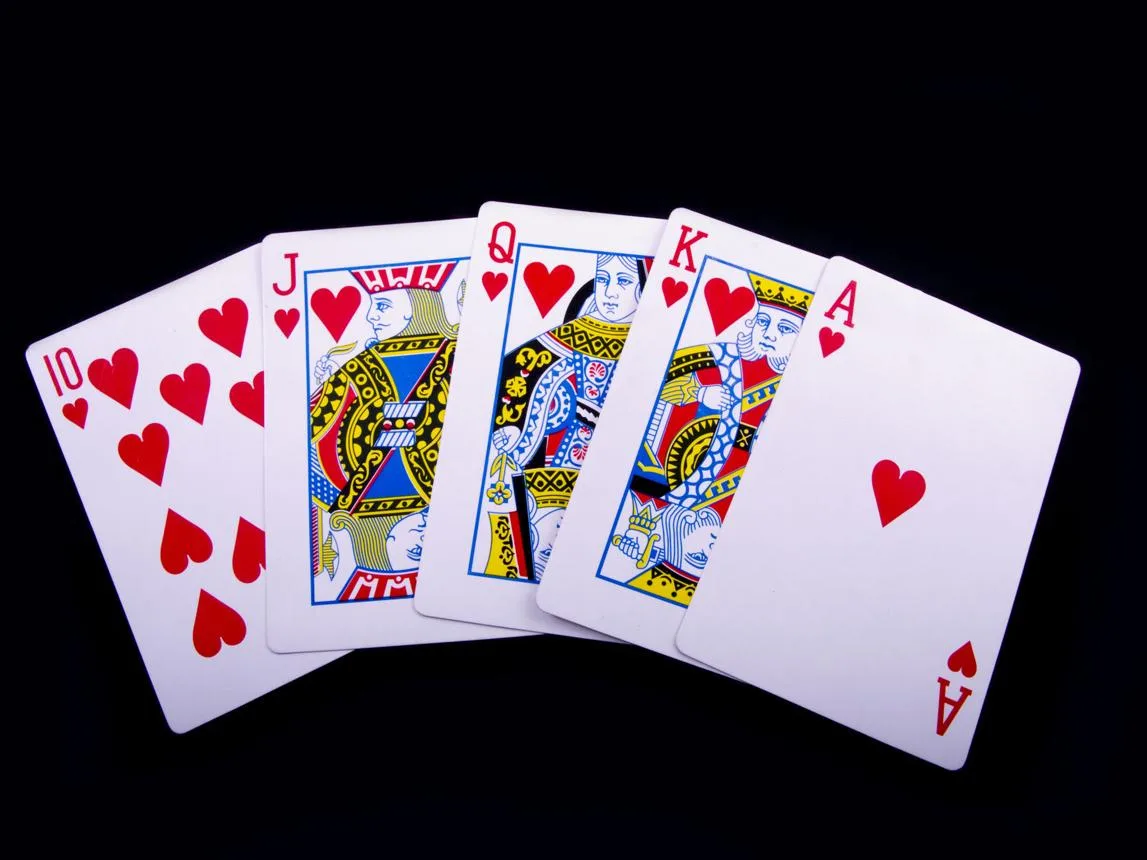
The Royal Flush. (Image: Final Thesis archive)
THE ROYAL FLUSH
Five cards. One King. An unanswered question.
01 · KING — Cinema. The next major theatrical chapter, scheduled for December 2026.
02 · Brands — Commercial power. A continuing endorsement and advertising presence that extends the superstar’s reach beyond film releases.
03 · Hurun — Wealth. Public net-worth estimates that illustrate the scale of his commercial empire, while remaining estimates rather than audited financial statements.
04 · Knight Riders — Global infrastructure. A sports and entertainment brand expanding into international franchises and physical venues.
05 · FLAM — Interactive AI. A documented investment connection to a company working on interactive AI content, opening questions about the future of fan participation and entertainment.
Individually, these are different business activities.
Together, they create a compelling question about the scale and direction of the next chapter.
Is KING simply the next film in an extraordinary cinematic career?
Or could it become the centre of a much broader convergence of film, fandom, technology, brands and global entertainment?
There is no public confirmation that these ventures are components of a single KING strategy. That is precisely what makes the ending suspenseful: the evidence gives us the cards, but not the hand.
And now the final question becomes sharper:
What if ASOKA TO BOODA is not the story of a King who has given up his kingdom, but of a King who has decided that the old kingdom was only the beginning?
He has played the game.
He has survived ZERO.
He has returned through Pathaan, Jawan and Dunki.
He has expanded beyond cinema.
And now he is called KING.
Is he cooking something?
Is this a Royal Flush?
Or are we still looking at only the first five cards?
What’s Mr. Khan up to? What is brewing behind the silence? And what storm is about to break when KING finally arrives?
From the Final Thesis
Added from the Final Thesis, word for word. Where a figure here differs from the sourced figure earlier in this chapter, the chapter’s figure stands; see Addendum B.
Be Da Boo-Da. This time, the King is going ALL IN.
Forget renunciation.
Forget walking away from the throne.
Forget the emperor who has seen the horrors of conquest and decided to surrender his empire.
This is ASOKA TO BOODA, 2026 edition.
The King has seen the game. He knows the game. He has already demonstrated that he can win the game.
And now?
He is doubling down.
Tripling down.
Putting the kingdom, the crown, the casino and the entire deck on the table.
The old ASOKA built an empire. The BOODA version has apparently discovered that there are more tables to play at.
Cinema. Advertising. Global sports. Technology. AI. Intellectual property. And an audience that spans continents.
The joke is dark. The implications are very real.
Because look at the sequence.
First, the films.
Pathaan. Jawan. Dunki.
The cinematic comeback was not a single lucky hand. Three major releases in one year restored Shah Rukh Khan’s box-office presence on an extraordinary scale.
Then the commercial machinery expanded around him.
Brands. Endorsements. New commercial partnerships. Public estimates placing him among the wealthiest figures in Indian entertainment.
Then cricket.
The Knight Riders brand, which began as an IPL franchise, expanded internationally. By 2026, the organisation’s Los Angeles-area cricket ground represented a move beyond the familiar business of owning a team and into physical sports infrastructure.
Then technology.
FLAM announced its $40 million Series B funding round in September 2026, with Shah Rukh Khan participating as an investor. The company’s stated focus includes interactive AI content and applications in entertainment, marketing and fan engagement.
And then comes KING.
A film whose title is almost too perfectly positioned for this moment.
The question is no longer whether the King can return to the box office.
The question is whether he is assembling a much wider entertainment ecosystem in which cinema is only one of the cards.
(Final Thesis, section 40)
The King Is Not Renouncing the Kingdom. He Is Going All In.
Let us return to the metaphor.
ASOKA TO BOODA — Be Da Boo-Da.
It begins with the familiar historical idea of a powerful ruler who, after a defining experience, turns away from conquest and toward another way of being.
But this is where the metaphor takes a sharp, satirical turn.
This time, the King is not giving up his kingdom. He is not walking away from the throne. He is walking back into the casino. And he is taking more chips to the table.
The King is going ALL IN.
Doubling down. Tripling down. Playing across multiple tables.
The Royal Flush.
The joke is in the reversal. The historical metaphor suggests renunciation. The contemporary celebrity-business story suggests expansion.
And the contrast becomes particularly interesting when we examine the public business developments surrounding Shah Rukh Khan in 2026.
(Final Thesis, section 47)
The cards on the table
The upcoming film KING is scheduled for a December 24, 2026 release, according to published reporting. It gives the story a powerful symbolic title and places the word KING at the centre of the next phase of the public narrative.
Following the 2023 comeback, reporting in January 2024 said Shah Rukh Khan had signed more than 10 brand deals since the release of Pathaan. The film, the celebrity, and the advertising market were reinforcing one another.
A September 2026 report citing the Hurun India Rich List placed Shah Rukh Khan’s estimated wealth at approximately ₹10,000 crore. This is a third-party estimate of wealth, not a verified personal balance sheet, cash holding, or audited valuation of all his assets.
Knight Riders — From the screen to the stadium
The Knight Riders’ expansion into the Los Angeles market and the proposed development of a cricket venue at Fairplex, Pomona, represent a move into sports, live experiences, and physical infrastructure.
September 2026 reporting on FLAM’s $40 million Series B funding round identified Shah Rukh Khan among the participants. FLAM operates in interactive AI-powered content and advertising. The investment is relevant to the digital marketing thesis, although it does not establish that FLAM is being integrated into KING or a Shah Rukh Khan fan platform.
These developments belong to different businesses, with different partners, ownership structures, financial arrangements, and operating objectives.
There is no evidence presented here that they are all components of a single, coordinated master plan.
But viewed together, they raise an important strategic question.
What happens when the same cultural figure has the capacity to attract audiences across cinema, advertising, sport, live entertainment, and digital technology?
The value of that figure is no longer confined to the film industry.
(Final Thesis, section 47)
The Royal Flush: A metaphor for portfolio power
In poker, a Royal Flush is a particular hand. In this paper, it is a metaphor for the potential interaction of several independent sources of cultural and commercial value.
The cards are not interchangeable.
- A film creates a story, characters, and a release event.
- An endorsement provides a brand relationship and commercial distribution.
- A sports venture creates recurring events, teams, venues, and communities.
- A technology investment offers exposure to tools that may change how content is created, distributed, or experienced.
- A global fan base supplies attention, cultural knowledge, creativity, and voluntary participation.
The strategic opportunity lies in whether these separate assets can reinforce one another without becoming indistinguishable.
A fan who watches a film may also follow a cricket team. A sports event may introduce a new audience to a cultural property. An interactive technology may provide new ways for fans to create and share stories.
But those are potential connections, not proof of existing integration.
The real question is whether a coherent, rights-respecting, fan-first experience can connect them.
(Final Thesis, section 47)
Why the metaphor matters to digital marketing
The old marketing model is built around the campaign.
A film is announced. The campaign begins. The audience is reached. The film opens. The campaign winds down.
The Royal Flush hypothesis suggests a different model.
The film becomes one event in a broader entertainment calendar. The fan relationship persists between releases. Commercial partnerships can contribute distribution and resources. Technology can enable participation. Sports and live experiences can create recurring touchpoints.
The result could be a portfolio in which each experience contributes to the next, while remaining commercially and creatively distinct.
This is not simply about increasing the number of advertisements or the volume of content.
It is about building a system in which cultural attention can compound over time.
(Final Thesis, section 47)
Be Da Boo-Da: The satire of the modern kingdom
Here is the dark humour of the chapter.
In the old story, the ruler confronts the consequences of power and renounces conquest.
In this story, the King looks at the board and discovers that there are more games to play.
Cinema. Advertising. Cricket. Stadiums. Technology. Global audiences. Fan creativity.
The empire is not being abandoned.
The empire is becoming a portfolio.
And the punchline is that the most interesting asset in the entire portfolio may not be a stadium, a film, a company, or a brand contract.
It may be the audience itself — not as property to be owned, but as a community of people who choose to participate.
That is the difference between a kingdom built around a celebrity and an ecosystem built with its fans.
The first concentrates power at the centre.
The second can create value across the network.
The Royal Flush is therefore not a prediction about Shah Rukh Khan’s intentions. It is the strategic possibility that emerges when several documented business and cultural developments are placed alongside the earlier experiments in digital marketing.
The cards are visible.
The hand is not.
And that brings us to the question that should close the chapter:
What is Mr. Khan cooking?
(Final Thesis, section 47)
BE DA BOO-DA.
Remember the story of the emperor who gave up conquest?
Forget it.
This time, the King isn’t giving up the kingdom.
He’s going ALL IN.
The movie KING. The endorsements. The Hurun wealth estimate. Knight Riders and the Los Angeles stadium project. The investment in FLAM, an AI-powered interactive-content company.
Different businesses. Different investments. No evidence that they are all part of one secret master plan.
But put the cards on the table.
Cinema.
Advertising.
Cricket.
Global business.
Technology.
A worldwide fan base.
And suddenly, the old story of renunciation becomes a very different kind of satire.
ASOKA TO BOODA — THIS KING ISN’T WALKING AWAY FROM THE THRONE. HE’S EXPANDING THE GAME.
The Royal Flush.
The point isn’t that every card belongs to the same hand.
The point is that the potential connections between them are enormous.
What if the next blockbuster didn’t just sell tickets?
What if it opened the door to a persistent entertainment ecosystem?
What if the fans could build stories, create content, play games, collaborate, and participate in the cultural life of the property?
What if the audience became the creative network that carried the universe forward?
And what if the industry finally stopped asking, “How many people can we reach for this film?”
And started asking:
“WHAT CAN WE BUILD WITH THE PEOPLE WHO ALREADY CARE?”
(Final Thesis, section 54)
THE ROYAL FLUSH
The central story, character and intellectual property.
Digital distribution, analytics, interactive media and potential AI-enabled creation.
Audience relationships, independent communities, original creative work and participation.
The possibility of a continuing entertainment relationship across films, games, events and licensed creative experiences.
The four elements are not a description of an existing integrated operation. They are the analytical framework through which this study considers the future of entertainment marketing.
The author’s 36-piece chess concept, the 81-square board, the lighter replacing the pawn, and the fire between King and Queen can serve as recurring visual metaphors for the same idea: the rules of participation are themselves part of the game.
The metaphor is deliberately provocative.
But the research question remains grounded:
Can the value of a film’s digital marketing extend beyond the release window and become a lasting, mutually beneficial relationship between a creative property and its audience?
(Final Thesis, section 67)