Part III · The Years of the Apparent Lull, 2014 to 2018 · 16 of 57
Chapter 14 · Seven Films, Side by Side
The train reached its station in August 2013. Then, film by film, the man who had driven it began to step off. The films kept coming and most of them made money. What thinned out was the story around them. This Part puts the seven films side by side, draws the curve, sets out five possible explanations, and states what the evidence can and cannot support.
2014: a tour and a trophy. The first film after the train was Farah Khan’s heist comedy Happy New Year, and its campaign went back to the stage: before release the cast toured North America and Britain as SLAM! The Tour, opening at Houston’s Toyota Center in September 2014. (Fact. ABC13 Houston, Sept 2014) His Knight Riders won their second IPL title on 1 June 2014. (Fact. Wikipedia: Kolkata Knight Riders)
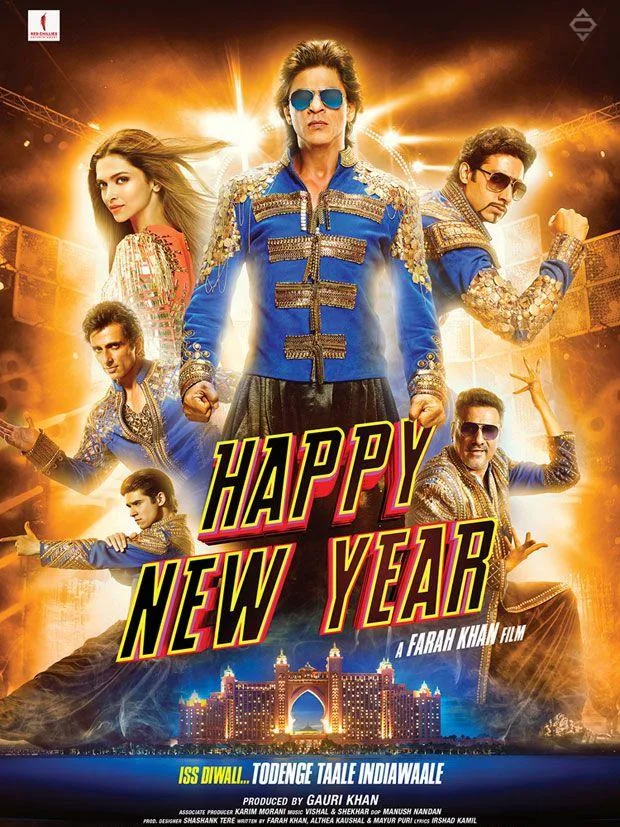
Happy New Year (2014)
2015: fifty, and a sentence. On his fiftieth birthday, 2 November 2015, he told an interviewer there was “extreme intolerance” in the country. Politicians attacked him, and Dilwale, his reunion with Kajol, met protests; in Mangaluru, Bajrang Dal activists stopped screenings. Four months later he said he had been misunderstood and added: “Freedom of speech means the right to keep silent also.” (Fact. The News Minute, 1 Mar 2016) The showman who had answered every question for twenty-five years had found a new position: silence as a right. (Analysis)
2016: a film about a fan. Fan was about the thing he knew best: Gaurav, an obsessive young man from Delhi who looks exactly like his idol, the star Aryan Khanna, and turns on him when the star rejects him. He played both, with prosthetics by the Hollywood make-up artist Greg Cannom and effects by Red Chillies VFX. (Fact. Wikipedia: Fan) The campaign was built around real fans: an anthem, “Jabra Fan”, recorded in several languages including Arabic, and a logo made from photographs of real fans. (Fact. same source; Gulf News) It is the most revealing film of the decade for this book: a star made a film about the danger of a fan who believes he owns the star, in the same years he was stepping back from his fans. (Analysis) Later that year Dear Zindagi, in which he played a therapist in a supporting role, became the first Hindi film to market itself on Tinder. (Fact. exchange4media, 14 Nov 2016)
2017: the train again, and a death. For Raees he went back to the idea that had worked in 2013, a train, but in person. On 23 and 24 January 2017 he rode the August Kranti Rajdhani from Mumbai to Delhi, meeting fans on the platforms. At Vadodara the crowd surged; one man died and two were injured. He called it “really unfortunate”. (Fact. Business Standard / IANS, 24 Jan 2017) In 2013 the train had been virtual and the fans moved it with their thumbs. In 2017 it was real, and a fan died on the platform. The direct line had become dangerous. (Analysis) Later that year Jab Harry Met Sejal replaced the single trailer with a series of short “mini trails”. (Fact. Millennium Post, 16 June 2017)
2018: the most inventive campaign since the train. Zero gave its hero, Bauua Singh, a short man from Meerut with an outsized ego, a digital life of his own: India’s first Snapchat lens for a film, a WhatsApp sticker pack, an Amazon Alexa skill billed as a first for a Bollywood film, a Twitter handle written by the film’s writer, and Bauua Ki Toli, a points game whose top fans met the cast. (Fact. exchange4media, 19 Dec 2018; Social Samosa) The trailer reached 100 million YouTube views faster than any Indian film before it. (Fact. Wikipedia: Zero) It cost ₹200 crore and grossed about ₹191 crore. (Fact. same source)
The seven-film matrix
| Film | Released | Director | Reported budget | Worldwide gross | Gross ÷ budget | The campaign’s big idea | The fan’s role |
|---|---|---|---|---|---|---|---|
| Chennai Express (benchmark) | 8 Aug 2013 | Rohit Shetty | ₹70–115 cr | ₹423–424 cr | 3.7–6.1 | A train fans moved with tweets; games, karaoke, interactive video; daily analytics | Driver, player, contributor |
| Happy New Year | 24 Oct 2014 | Farah Khan | ₹140–150 cr | ₹342–394 cr | 2.3–2.8 | SLAM! The Tour, a live world tour | Audience at a show |
| Dilwale | 18 Dec 2015 | Rohit Shetty | ₹165 cr | ₹376.85 cr (est.) | 2.3 | The reunion with Kajol | Viewer |
| Fan | 15 Apr 2016 | Maneesh Sharma | ₹85 cr (₹105 cr with publicity) | ₹182–188 cr | 1.7–2.2 | “Jabra Fan” in several languages; a logo of real fans’ photos | Subject of the campaign |
| Dear Zindagi | 25 Nov 2016 | Gauri Shinde | ₹22 cr | ₹138.91 cr | 6.3 | A Tinder tie-in, “Swipe Right for Zindagi” | User of a partner app |
| Raees | 25 Jan 2017 | Rahul Dholakia | ₹87–91 cr | ₹272.54–281 cr | 3.0–3.2 | A real train, Mumbai to Delhi | Crowd on a platform |
| Jab Harry Met Sejal | 4 Aug 2017 | Imtiaz Ali | ₹90 cr | ₹153.43 cr (est.) | 1.7 | Thirty-second “mini trails” | Viewer, sharer |
| Zero | 21 Dec 2018 | Aanand L. Rai | ₹200 cr | ₹191.43 cr | 0.96 | Bauua’s own digital life: Snapchat lens, stickers, Alexa, Bauua Ki Toli | Player, within the release window |
(Fact for the first six columns: each film’s Wikipedia page and Red Chillies’ filmography, October 2026; where sources disagree, the range is printed. The ratio is this book’s arithmetic, gross against reported budget, and is not profit. The last two columns are Analysis. Fan was a Yash Raj Films production; the others after Chennai Express are Red Chillies productions or co-productions.)
Read the matrix row by row and one thing is plain: the money held up. Six of the seven grossed more than their reported budgets, and Dear Zindagi, a small film with him in a supporting part, returned the most per rupee. Only Zero grossed less than it cost. (Fact, from the table) Read it column by column and something else appears. Every campaign had a clever idea: a tour, a dating app, a train, an AR lens. None was a system. Chennai Express gave the audience a role across every channel for ninety days. Its successors gave the audience a moment, then moved on. (Analysis)
What the matrix leaves out. Each campaign had more pieces than its big idea. Happy New Year had an official game for Android and iOS, built with Gameshastra and released on 13 October 2014, and posters personalised in the cast’s own handwriting for social media; before release its distribution, satellite and music rights had brought in ₹202 crore. (Fact. Wikipedia: Happy New Year) Fan painted his own house in graffiti, ran a contest called “Tu Nahi Samjega” and put a mobile game by 99Games into development; its trailer drew 4 million views in 24 hours. (Fact. Wikipedia: Fan) The social-media campaign of Jab Harry Met Sejal won the Capability Award for Best Use of Social Media at the Asian Customer Engagement Forum. (Fact. Wikipedia: Jab Harry Met Sejal) Zero added a TikTok #zerochallenge, open until 26 December 2018, and from 30 November a Bauua Ki Toli site where fans earned points through social-media tasks, redeemable for merchandise, signed posters and Paytm ticket cashback; its trailer drew 54 million views in its first 24 hours, and from 5 to 7 December he played to about 100,000 people at Dubai’s Global Village. (Fact. Social Samosa, 21 Dec 2018; Wikipedia: Zero)
None of these campaigns published a participation figure to set beside Chennai Express’s 750,000 tweets: no game downloads, contest entries, Toli members or lens uses. (Fact: the sources above) The absence is itself a finding. A campaign that counts its fans’ actions every day is built differently from one that counts its views. (Analysis)
From the Final Thesis
Added from the Final Thesis, word for word. Where a figure here differs from the sourced figure earlier in this chapter, the chapter’s figure stands; see Addendum B.
The comparative matrix
Innovation dimensions: digital product development, audience participation, original technology, character/IP extension, and evidence of an integrated campaign. The assessment is qualitative, based on publicly documented campaign activity—not private access to campaign budgets or internal meetings.
| Film / year | Documented digital marketing and promotional activity | Comparison with the RA.ONE / Chennai Express standard |
|---|---|---|
| RA.ONE (2011) | Official digital presence, Google+ fan interaction, games, merchandise, character promotion and franchise-building activity. | Benchmark Digital and physical IP extension, with a clear attempt to build beyond the film. |
| Don 2 (2011) | The “Don Says” sequence of dialogue promos, online trailers, 3D promotion, a card-magic promotional video, and Wi-Fi partnerships with McDonald’s and Café Coffee Day. | Moderate Strong character-led digital storytelling and distribution partnerships. Less evidence of a participatory digital product ecosystem on the Chennai Express model. |
| Jab Tak Hai Jaan (2012) | Official trailers, songs, posters, interviews, and conventional multi-platform publicity. | Limited documented innovation The available campaign record is primarily content-led. |
| Chennai Express (2013) | Interactive train, integrated website, games, mobile apps, karaoke, interactive video, SMS, analytics, and fan-club coordination. | Benchmark The fullest documented integration of audience participation and technology in the period. |
| Happy New Year (2014) | An official mobile game, digitally personalised cast posters in the actors’ handwriting, and the SLAM! international promotional tour. | Partial continuation Original digital extensions and gamification, but less evidence of real-time audience co-creation across an integrated suite of products. |
| Bhoothnath Returns (2014) | Khan appeared in a special role. The main campaign was built around the film’s own identity and lead cast. | Not directly comparable His appearance does not establish a Khan-led technology marketing programme. |
| Dilwale (2015) | Trailer and song releases, cast and making-of videos, social media publicity, and promotional activity built around the SRK–Kajol pairing. | Content-led A substantial digital footprint, but publicly documented campaign mechanics are primarily promotional content rather than a new interactive platform. |
| Fan (2016) | The Gaurav/Aryan character duality, character-focused trailers and videos, fan-oriented social media, and digital publicity around the film’s fan narrative. | Creative concept innovation The film’s subject offered an unusually strong foundation for fan participation, but the documented campaign is less developed as a reusable digital game or franchise ecosystem than the benchmarks. |
| Ae Dil Hai Mushkil (2016) | Khan’s special appearance; campaign activity centred on the film and its principal cast. | Not directly comparable No substantial Khan-led digital innovation programme established by the sources reviewed. |
| Dear Zindagi (2016) | A Tinder India collaboration, “Swipe Right to Zindagi,” plus social-media content built around the film’s conversations about relationships and life. The campaign also received social-media marketing awards, including recognition for viral marketing. | Strong thematic innovation An effective brand-content integration, although its model is primarily conversation and content rather than participatory entertainment technology. |
| Raees (2017) | Character-led social media, dialogue and trailer releases, promotional events, and publicity built around the Raees persona. | Content-led Character branding and reach, but less publicly documented evidence of a new digital product or fan-powered mechanic. |
| Tubelight (2017) | Khan’s special appearance; the main marketing activity centred on Salman Khan and the film’s campaign. | Not directly comparable No substantial Khan-led digital campaign is established by the reviewed sources. |
| Jab Harry Met Sejal (2017) | Mini-trails released ahead of the full trailer, a Facebook Camera Effect with film-themed elements, and song-led social promotion. | Platform experimentation Distinctive use of short-form serial content and a platform-native camera effect. More focused on social sharing than on an integrated, persistent digital experience. |
| ZERO (2018) | Bauua Singh’s Twitter persona, WhatsApp stickers, Bauua Ki Toli fan engagement and rewards, Alexa character interaction, and a Snapchat AR lens. | Significant digital innovation A strong character-based digital campaign with gamified engagement and emerging voice/AR experiences. It is the clearest later counterexample to a claim that all innovation had disappeared. |
(Final Thesis, section 6)
Other releases and appearances within the period
For completeness, the following are not included as full campaign comparisons because Khan was not the principal actor or the available public evidence does not establish a standalone Khan-led campaign:
- 2011: Always Kabhi Kabhi (producer), Love Breakups Zindagi and Shahrukh Bola Khoobsurat Hai Tu (special appearances).
- 2012: Student of the Year (narration/special appearance).
- 2016: Ae Dil Hai Mushkil (special appearance).
- 2017: Tubelight (special appearance).
The important methodological distinction is between a film that has online promotion and a film whose campaign was designed around a new digital mechanism. The table is intended to assess the latter, not to suggest that ordinary publicity did not take place.
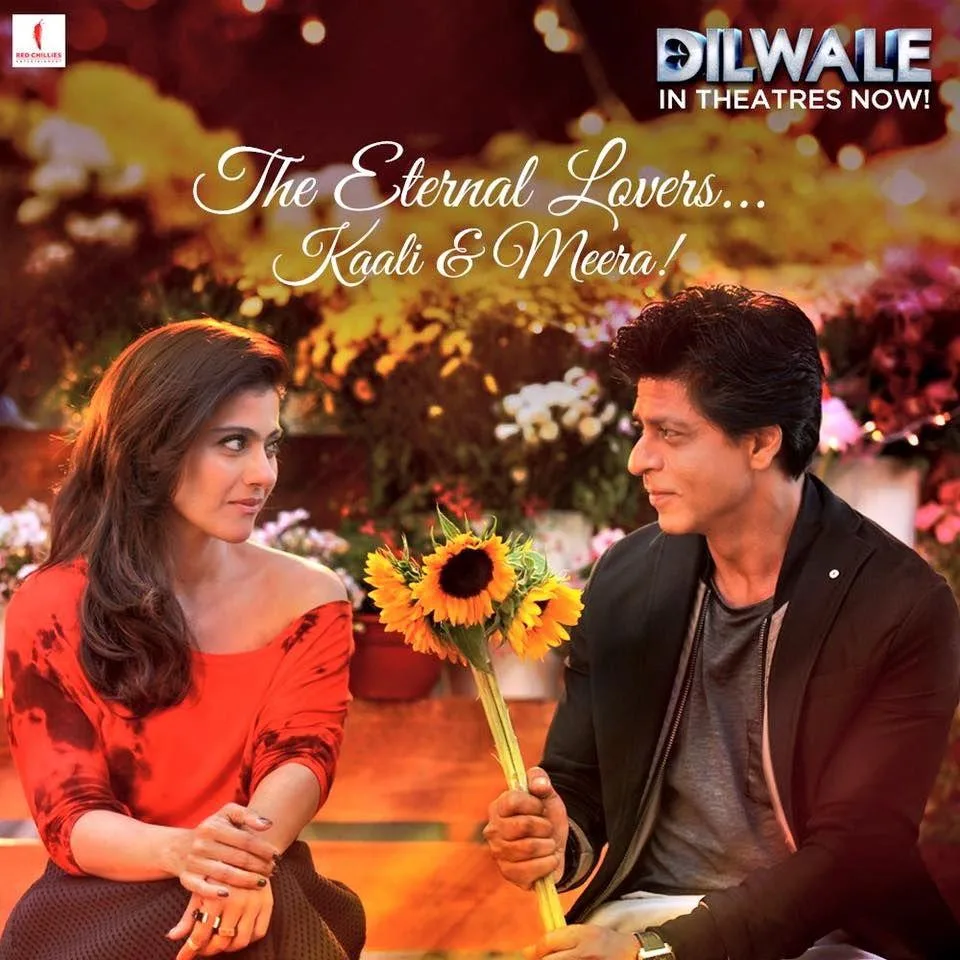
Dilwale (2015)
(Final Thesis, section 6)
2014 — Happy New Year: The audience as a global community
Happy New Year extended the participatory model through games, personalised content and the World Dance Championship narrative.
The film’s promotional identity made collective performance and participation part of its storytelling language.
Its SLAM! tour further connected the film to a global fan community through live appearances and events.
The campaign continued the movement between cinema, social media, gaming and live entertainment, even as the precise mechanics differed from those of Chennai Express.
The important point is that audience participation had become a recognisable component of Shah Rukh Khan’s film marketing.
It was no longer an isolated experiment.
(Final Thesis, section 21)
2015–2016 — Dilwale and Fan: Content, characters and social media
With Dilwale and Fan, the emphasis shifted towards character-led content, music, publicity and platform-specific promotional activity.
Fan was especially interesting because its premise directly examined the relationship between a superstar and an admirer.
The film placed fandom itself at the centre of its story.
That made it a natural subject for a deeper exploration of fan identity, the emotional relationship between public figures and audiences, and the blurred boundary between the person and the persona.
Yet the existence of a film about fandom does not, by itself, create a participatory fan platform.
The distinction remains between representing fans in a story and giving fans the tools to create stories of their own.
(Final Thesis, section 21)
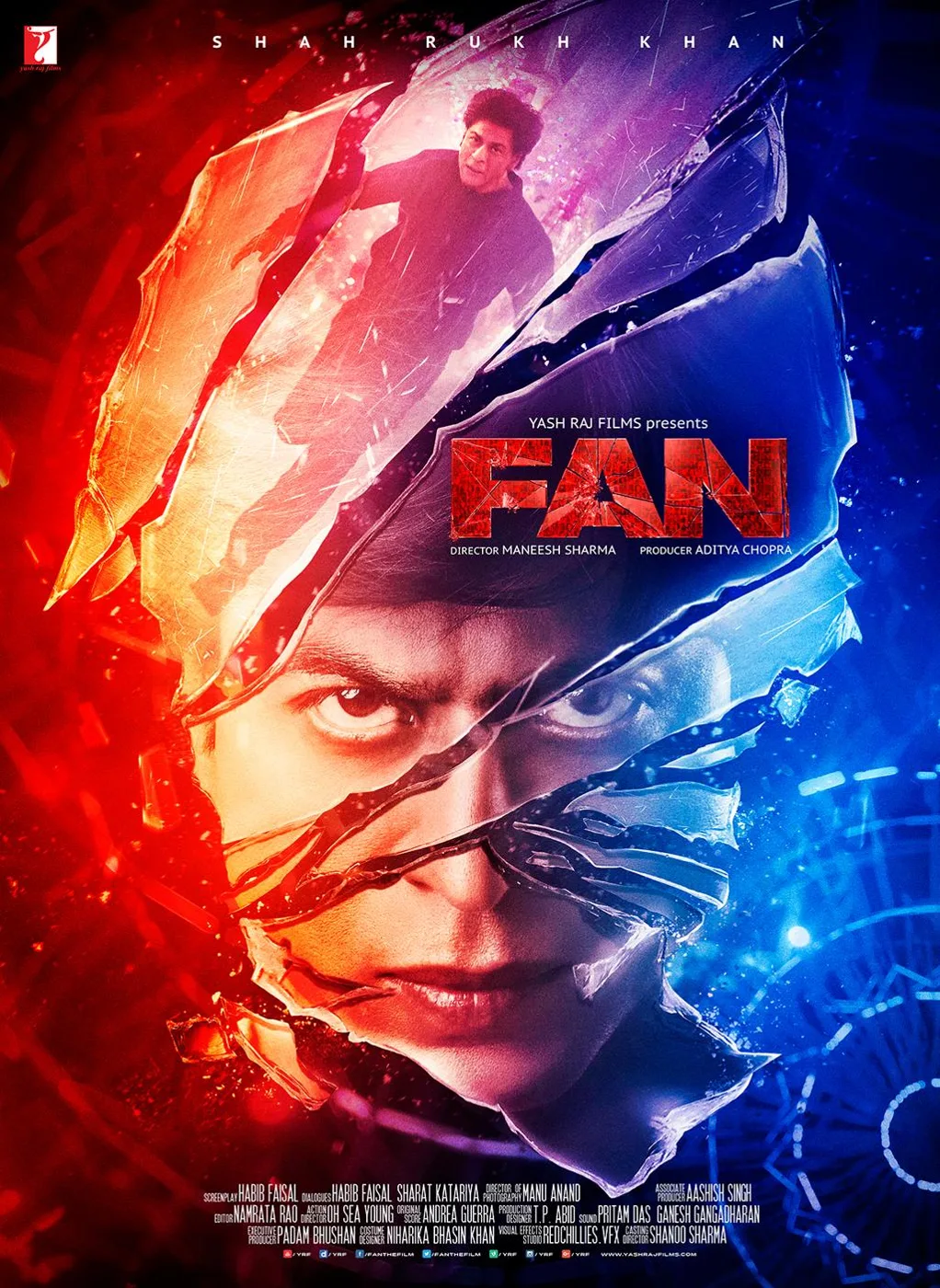
Fan (2016)
2017 — Dear Zindagi and Jab Harry Met Sejal: Platform-led storytelling
The promotional activity surrounding Dear Zindagi included the Tinder integration known as “Swipe Right to Zindagi,” connecting the film’s themes to an existing digital behaviour.
Jab Harry Met Sejal experimented with short-form promotional content, including its mini-trail format and social-media effects.
These campaigns demonstrated the value of meeting audiences on platforms they already used.
But they also illustrated the changing nature of digital marketing.
The platform increasingly became the distribution mechanism, the engagement environment and, in some cases, the source of the creative format.
This raises an important question for any campaign assessment:
When an audience encounters a film through a platform-specific promotion, is it participating in a lasting entertainment ecosystem, or is it participating in a temporary campaign designed around the release?
Both approaches can be commercially useful. They produce different kinds of audience relationships.
(Final Thesis, section 21)
2018 — ZERO: The end of one chapter, the beginning of another
ZERO is the critical bridge in this story.
The film used Shah Rukh Khan’s Bauua Singh character as a distinctive promotional identity. Its campaign included character-led content, WhatsApp stickers, Bauua Ki Toli rewards and platform-based experiences, including Alexa and Snapchat AR initiatives.
This matters because it complicates any simplistic argument that digital innovation disappeared after Chennai Express.
It did not.
The public campaign record shows continuing experimentation.
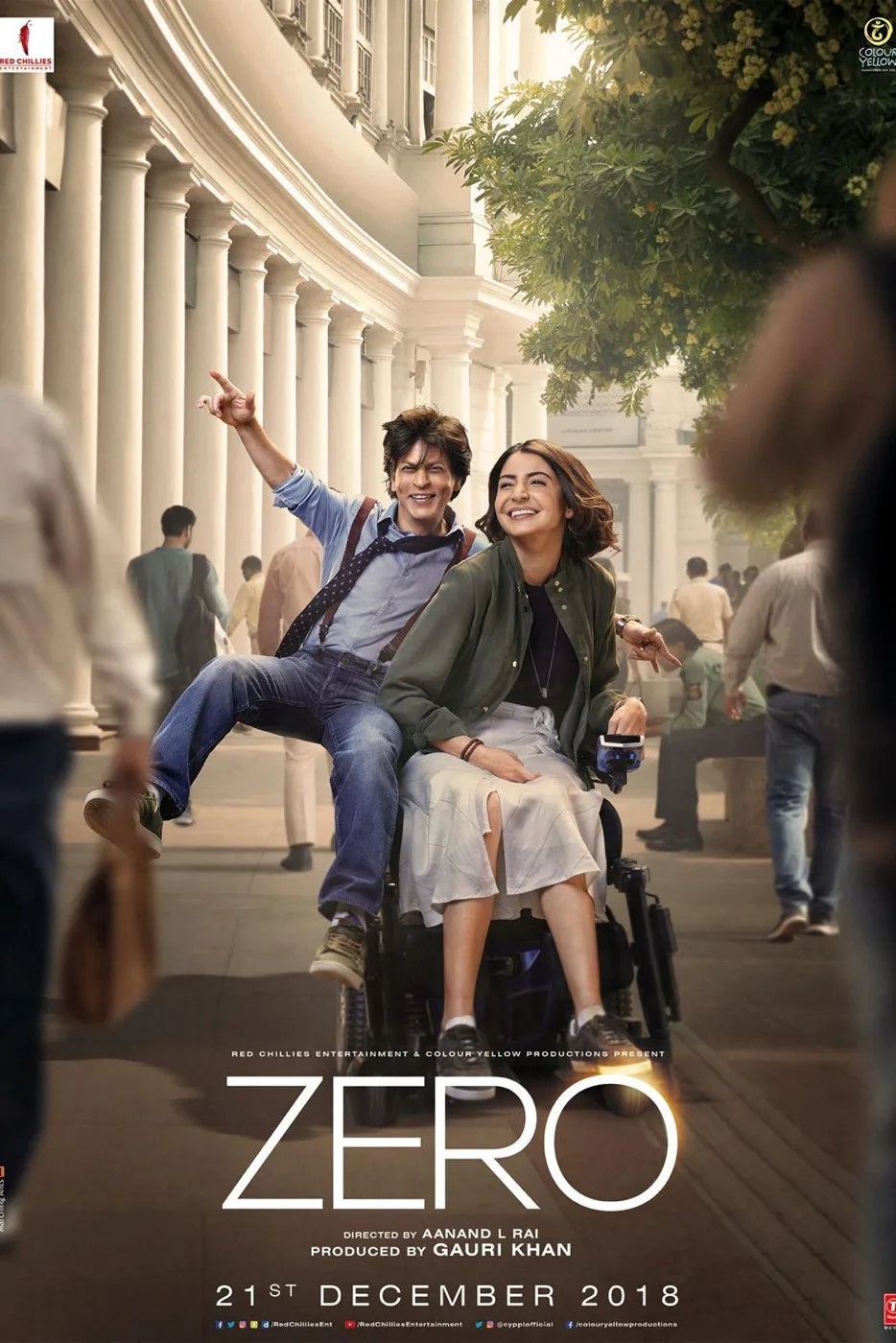
Zero (2018). (Posters: Final Thesis archive)
But the nature of the innovation was changing.
The earlier Ra.One and Chennai Express initiatives had attempted to build interconnected experiences around intellectual property, fan participation and digital products. Later campaigns more often concentrated on individual film identities, platform integrations, promotional content and release-specific engagement.
That is a difference of emphasis—not proof of the abandonment of innovation.
The 2010–2018 record therefore reveals two parallel histories: the continuing evolution of film promotion, and the more intermittent pursuit of a persistent, fan-powered entertainment ecosystem.
That distinction is essential when examining what came next.
(Final Thesis, section 21)
The missed opportunity—or the unrecorded evolution?
Consider the possibilities.
Fan explored the relationship between a celebrity and his obsessive admirer. Raees built a world around a character, a region and a distinctive persona. Zero placed Shah Rukh Khan in a visually unusual, technically ambitious role.
Each property presented opportunities for digital extensions, fan-created narratives, interactive character experiences or games.
Whether those opportunities were considered, implemented, rejected or judged commercially unviable is not established by the box-office record.
The important question is not whether every film should have had a game.
It is whether a durable marketing capability survived from one release to the next.
If a studio invests heavily in creating a character universe, should the value of that investment expire when the film completes its theatrical run?
Could the audience relationships created for one film have become a reusable platform for the next?
That is the innovation gap this case study proposes to investigate.
(Final Thesis, section 60)