Part VII · The Next Frontier · 38 of 57
Chapter 36 · Who Owns the Face: Inquilaab
Before the studio had shown more than a teaser, fans began making their own KING with AI: concept trailers, first looks, songs and scenes, several naming the tools that made them, Kling, Seedance, Grok. The campaign’s daily scan had found and linked 40 such works by 18 October 2026; the 21 that show public view counts had 2,883,120 views between them. (Fact: the campaign’s AI creator log, 18 Oct 2026. A floor, not a census.)
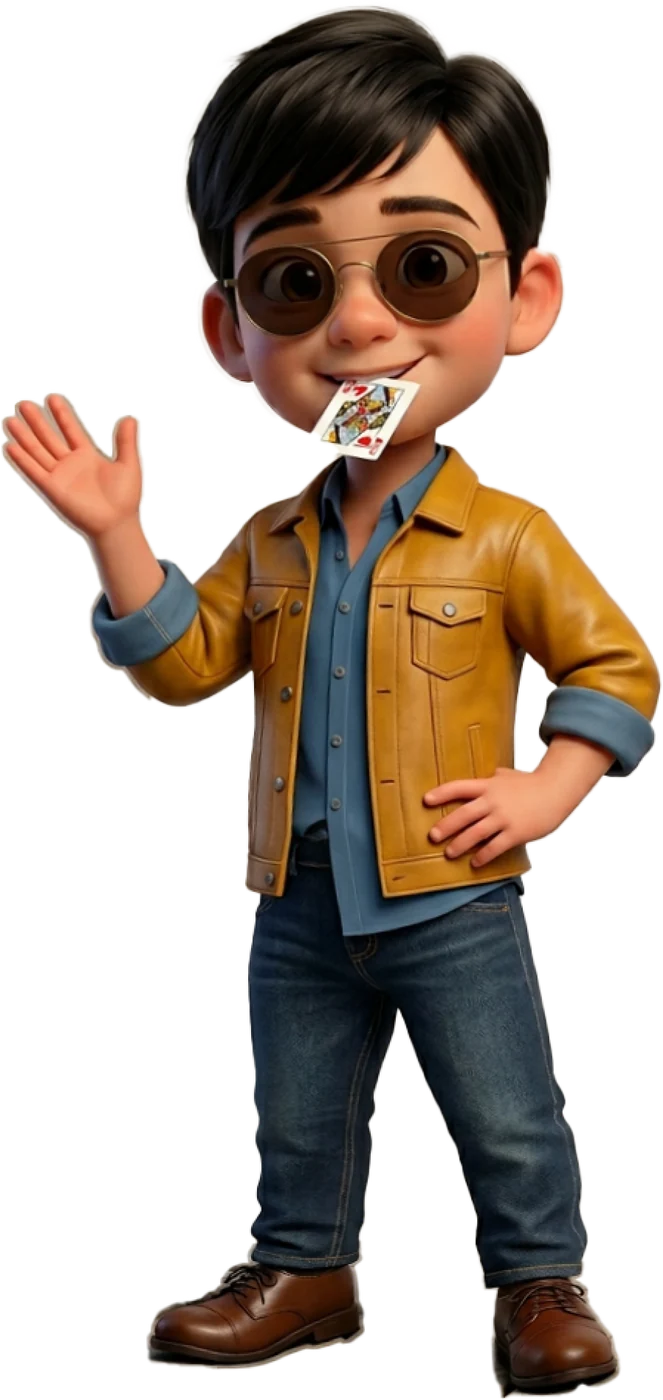
The Fan-made AI Universe. (The campaign's art, agarmainkinghota.com)
A new oil, and nobody holds the licence. When oil was found, the car followed, then the road, the mechanic, the driver and a whole economy. A star’s face is the oil of the AI era. Fans drill it without a licence, AI companies refine it without paying for it, and the people who own it have not yet built a pipeline. The opportunity is an official reserve: the star’s likeness, voice and worlds opened to storytellers on fair terms, so the star earns from the fans’ creativity instead of fighting it, and fans create without fear. (Analysis)
The rulebook, 2022 to 2026. In four years Indian courts and an Indian ministry wrote the first working rules for a famous face. The Delhi High Court protected Amitabh Bachchan’s name, voice and image on 25 November 2022, Anil Kapoor’s on 20 September 2023, including AI morphing, Jackie Shroff’s on 15 May 2024, and Aishwarya Rai Bachchan’s on 9 September 2025; Abhishek Bachchan, Akshay Kumar, Ajay Devgn, R. Madhavan and Kajol followed into early 2026. From 20 February 2026 India’s amended IT Rules require realistic AI media to be labelled, carry permanent metadata, and come down within three hours of a lawful order. (Fact. The Week, 25 Nov 2022; Business Today, 20 Sep 2023; Mondaq, 27 May 2024; The Hollywood Reporter India, 16 Sep 2025; Storyboard18; Hogan Lovells) Abroad, Tennessee’s ELVIS Act (2024) added voice to likeness rights, and the US TAKE IT DOWN Act (2025) set a 48-hour removal rule for non-consensual intimate images. (Fact. AP via News4JAX, 21 Mar 2024; Akin Gump)
The name not on the list. Three of his KING co-stars, Abhishek Bachchan, Anil Kapoor and Jackie Shroff, hold court orders over their own likeness. This book found no public record that Shah Rukh Khan has sought one. (Fact, as sourced above) MediaNama’s tracker of personality-rights cases in the Delhi High Court, published in September 2026, lists more than forty people and companies, among them Salman Khan (July 2026) and Manoj Bajpayee (September 2026), his old Theatre Action Group colleague. Shah Rukh Khan is not on it. (Fact. MediaNama, Sept 2026) [Unverified] the Bombay High Court’s record. On the public record, much of KING’s cast is protected from AI copies by a court; its lead is protected mainly by his fans. (Analysis)
The fan exception. The Jackie Shroff order barred commercial use of his name, voice and image, but declined to act against a fan’s “Thug Life” compilation video. (Fact. S.S. Rana) Tribute was protected; trade was not. That is the line Inquilaab asks a law to write down. (Analysis)
INQUILAAB. The fans have a word for how AI tools use a famous face without consent: face theft. Their answer is INQUILAAB, spelt in a nod to Amitabh Bachchan’s film Inquilaab, under the hashtag #FreeMyFace. Fans have defended stars before: in January 2024 Taylor Swift’s fans flooded X to bury explicit AI fakes of her. (Fact. KTVU / AP, Jan 2024) Those were defences. Inquilaab is a demand, and its five words spell the AI law the fans want: consent, the star decides what goes in the reserve; share, every licensed use pays the star and the owner of the work; labels, official and fan-made work clearly marked; limits, no deceptive deepfakes and no harmful or explicit use; credit, fan creators named and able to earn. It is not a lawsuit, and it does not speak for the star or any studio. (Fact: the Inquilaab manifesto at agarmainkinghota.com; Proposal)
The campaign applies the rule to itself. Its poster studio sends the film poster to the AI blurred, so no star’s face reaches the model; tells the model to depict no real actor or public figure; and marks every finished poster “AI-made fan poster”, with an AI provenance note written into the image file. Its slogan is four words: “Your face. Not his.” (Fact: the Make Your Poster studio at agarmainkinghota.com, 12 Oct 2026) India’s 2026 rules ask platforms for exactly those two things, a label and provenance. The rules are written for platforms, not fan sites; the studio follows them anyway. (Analysis)
The circle closes here. In 2000 his website put the fans’ faces around his. In 2011 the author’s team built a hero who lived online before he lived on screen. In 2021 a chocolate brand licensed his face to small shopkeepers, with his consent. In 2026 the audience builds the hero itself. The question is no longer whether fans will make the work. It is who owns the face when they do. Will the first AI law for fans be written in a courtroom, or in a comment section? (Analysis; the author’s questions)
The other court, in Mumbai. The Bombay High Court keeps its own line of orders. On 26 July 2024 it barred AI tools from cloning Arijit Singh’s voice, name and likeness, in what World Trademark Review called India’s first ruling on AI voice cloning (Arijit Singh v Codible Ventures). (Fact. World Trademark Review, 29 Aug 2024) In October 2025 Justice Arif S. Doctor gave Akshay Kumar urgent interim protection against platforms and AI content creators, calling realistic AI deepfakes “deeply concerning”. (Fact. News On AIR, 18 Oct 2025) In February 2026 Shatrughan Sinha asked the same court to protect his name, voice and his catchphrase “Khamosh”, claiming ₹20 crore in damages; Justice Sharmila Deshmukh reserved her order on interim relief. (Fact. Outlook India, 17 Feb 2026) These searches, run on 31 October 2026, found no filing by Shah Rukh Khan in Bombay either, so the open item on the Bombay record stays open. (Method note)
From the faker to the platform. On 6 September 2025 Aishwarya Rai Bachchan and Abhishek Bachchan filed two suits in the Delhi High Court against YouTube and Google, seeking about ₹4 crore (US$450,000) in damages. Their filings cited one channel’s 259 AI-made videos, viewed 16.5 million times, and argued that training AI models on such content could multiply the misuse. The court asked Google to answer in writing before a hearing on 15 January 2026. (Fact. Gulf News, 3 Oct 2025) [Unverified] what was decided at or after that hearing; the Delhi High Court’s cause list or order sheet would settle it. The fight had moved from the person who makes a fake to the platform that hosts it and the model that learns from it. (Analysis)
The most-faked face. McAfee’s 2025 “Most Dangerous Celebrities: Deepfake Deception List” for India put Shah Rukh Khan first and Alia Bhatt second. Its online survey, run in August 2025 across seven countries, found that 90% of Indians had met fake or AI-made celebrity endorsements, and that victims lost Rs 34,500 on average. (Fact. ThePrint, 17 Nov 2025) On the public record, the most-faked face in India is also the one with no court order behind it. That is the gap Inquilaab stands in. (Analysis)
The catchphrase, protected. On 16 February 2026 Justice Sharmila U. Deshmukh of the Bombay High Court gave Shatrughan Sinha an ex parte ad interim injunction (Shatrughan Prasad Sinha v. John Doe). His name, voice, image, likeness and his catchphrase “khamosh” may not be used through AI, deepfakes or face morphing, in content or on apparel, posters and books, and the defendants must take down every infringing link. Those named included social media platforms, adult websites and e-commerce portals; the matter was listed for 30 March 2026. (Fact. SCC Online, 23 Feb 2026) A line of dialogue can now be guarded like a face. His own lines, from Darr to Don, are guarded by no such order on the public record. (Analysis)
Fans are not infringers. In October 2025 Hrithik Roshan asked the Delhi High Court to act against merchandise, AI content and fan pages that used him. Justice Manmeet Pritam Singh Arora granted relief against specific URLs selling T-shirts and bags with his name and image, and against AI content exploiting his likeness, but refused an ex parte takedown of Instagram fan pages and fan clubs: “We can’t have fanclubs taken down at ex parte stage.” Dance tutorials set to his songs stayed up. Meta was told to hand over the fan-page administrators’ subscriber details within three weeks, so that he could bring them into the case. (Fact. Supreme Today, 16 Oct 2025) It is the Jackie Shroff line drawn a second time: the court did not bless the fan pages, it asked to hear them. A fan movement that wants its tribute protected will one day have to stand in that room and explain itself. (Analysis)
Copyright in a face. Denmark is taking another road. After a broad political agreement in June 2025, the Danish government was due to introduce, in the week of 8 October 2026, an amendment to its copyright law banning the sharing of realistic deepfakes of anyone’s face or voice without consent, ordinary people as well as artists. Satire, parody, caricature and criticism of power stay allowed; culture minister Zenia Stampe said a main aim was fast removal by the large platforms, and hoped the law would take effect at the start of 2027. (Fact. Euronews, 8 Oct 2026) [Unverified] whether the bill was tabled that week and whether it has passed; the Folketing’s record of the bill would settle it. India protects the famous one court order at a time; Denmark proposes to protect everyone by statute. Inquilaab’s first word, consent, is the Danish bill’s first principle. Its words share and credit are in neither. (Analysis)